Talk Now

Crypto | UAE

UAE free zones for crypto

Simple guide to picking the right UAE free zone for crypto

Key takeaways

  • Start with your actual virtual asset activity and counterparties, then choose the regulator and free zone that match them
  • ADGM and DIFC suit institutional trading, funds and brokerage, while DMCC, DWTC and other zones often work better for Web3 studios and commercial roles
  • Banking comfort and regulatory reputation matter as much as headline free zone pricing when you plan to work with serious partners
  • A structured plan with advisors like Aston VIP helps you combine the right mix of entities, licences and locations for long term growth

Choosing a home in the UAE for a digital asset business now feels less like picking a sunny offshore base and more like designing an institutional structure. There are financial free zones with their own courts and regulators, specialist crypto hubs and newer digital asset oases. Each one is trying to attract your project, yet they do not work in the same way. A simple guide to picking the right UAE free zone for crypto friendly company setup has to start from how you actually plan to trade, issue or build.

For founders, the first decision is not “which free zone has the cheapest package” but “which regulator will oversee my activity”. Abu Dhabi Global Market and Dubai International Financial Centre run their own digital asset regimes, separate from the rest of the country, with dedicated rules for tokens, custody, brokerage and funds. Dubai’s Virtual Assets Regulatory Authority then sits on top of most other Dubai free zones and the mainland, supervising virtual asset service providers from licensing through to marketing. Beyond Dubai, the federal Securities and Commodities Authority and the Central Bank also shape how crypto businesses can operate, especially where services look like securities, payments or derivatives.

Resources to help you

If you already know you want Dubai, it is worth reading Aston VIP’s overview on crypto company setup in the Emirate, which explains how onshore, free zone and specialist regimes fit together.

The aim of this simple guide to picking the right UAE free zone for crypto friendly company setup is to translate that regulatory map into practical choices. By the end you should understand which free zones suit pure holding companies, which ones match exchanges or brokers and which ones give better optics for funds, family offices and serious Web3 studios. You may also be able to glean further insights from our article on how to choose the right UAE free zone for your business.

Why the UAE is now a primary base for crypto firms

Over the last few years, the UAE has brought digital assets into formal regulation rather than leaving them in a grey zone. ADGM’s financial services regulator was one of the first in the region to issue a full digital asset framework, including a category of accepted virtual assets and regulatory capital for firms that handle them. DIFC has its own crypto token regime under the DFSA, with dedicated guidance on how tokens are recognised, how custody and trading are supervised and what happens when a token no longer meets the criteria.

In Dubai outside DIFC, VARA now regulates virtual asset activity across free zones and mainland, including the Dubai World Trade Centre free zone and the DMCC crypto centre. Ras Al Khaimah has introduced a dedicated digital assets oasis for Web3 projects, while other free zones work with federal rules from the SCA. This mixture gives genuine choice, as long as you understand what each piece is designed to do.

Al Maryah Island | Experience Abu Dhabi

What crypto friendly really means in a free zone

When founders talk about a “crypto friendly” free zone, they usually mean four things. First, clear licensing rules for their activity rather than vague references to “technology projects”. Second, a regulator that understands virtual assets and publishes guidance rather than reacting case by case. Third, banking partners and counterparties that take comfort from the jurisdiction. Finally, predictable compliance costs that fit the size and risk of the business.

In practice, that means a VARA, ADGM or DIFC structure for regulated exchanges, brokers and custodians, and a broader menu of free zones for light touch Web3 studios, dev houses or marketing businesses that do not touch client assets. Choosing between them is less about marketing slogans and more about how your product, revenue flow and investor profile line up with each regulatory family.

For a broader map of free zones beyond crypto, Aston VIP’s guide to UAE free zones is a useful reference point that can sit alongside this article. 

The right UAE free zone for a crypto friendly company setup depends first on your regulated activity and counterparties, then on costs, talent pool and long term exit plans, not on a generic “best free zone” list.

Simple guide to picking the right UAE free zone for crypto friendly company setup

A structured way to choose a free zone is to move through three questions. What regulated activity will you carry out in the next two to three years? Who will you serve and what licences will your key partners hold? How important is legal reputation compared with headline cost for your investors, banks and regulators in your home country?

Start with your core activity. If you are running an exchange, brokerage, proprietary trading desk or custody platform, you will probably sit under the DFSA in DIFC, the FSRA in ADGM or VARA in Dubai. If you are issuing tokens, running a DeFi protocol front end or building infrastructure where you do not hold client funds, you may fit better into a general purpose free zone with a technology or software licence combined with careful legal analysis of how the protocol operates.

At the same time, consider whether your structure includes holding vehicles, ip entities or separate marketing companies. Many founders use a combination of a regulated financial free zone entity for high risk activities and a more cost efficient free zone company for development or regional marketing. Aston VIP’s articles on ADGM and DIFC give good context on how these layers can be stacked.

To understand how different types of virtual asset service providers sit within the wider UAE regulatory system, it is worth reading Aston VIP’s overview of VASP categories, including exchanges, brokers and custodians.

Leave your number and we’ll call you back in 5 minutes!

Our working hours: Monday to Friday, 9 AM – 6 PM GMT+4

Phone number

Prefer messaging? Contact us through messengers or simply give us a call:

When a financial free zone is usually the right answer

For institutional trading desks, prime brokers, otc venues and digital asset funds, the conversation normally narrows quickly to ADGM or DIFC. These two financial free zones operate on a common law basis and have independent regulators and courts. Their frameworks recognise digital assets as a distinct class, with explicit guidance on token recognition, custody standards, disclosure and market abuse.

ADGM is often chosen by brokerages, exchanges and professional platforms that want a balance of robust oversight and relatively streamlined approvals for virtual asset activities. DIFC, under the DFSA, suits firms that want to sit within a regime that is very close to United Kingdom standards, especially where they will be dealing with banks, funds and traditional finance counterparties who already understand the centre.

For founders planning a hedge fund, prop house or active trading vehicle, Aston VIP’s articles on ADGM hedge funds and DIFC fund managers are a useful companion to this guide.

a person pointing at a calculator on a desk

"Instead of chasing the cheapest package, serious crypto founders start by matching their activity and counterparties to the right regulator, then choose the free zone that can support that relationship for a decade."

When a commercial free zone is the better fit

Not every crypto linked venture needs a financial services licence. Web3 studios, GameFi developers, analytics platforms, marketing agencies and non custodial wallet providers often sit more comfortably in commercial free zones where they can demonstrate that they do not hold or intermediate client assets.

In Dubai, DMCC has positioned itself as a hub for digital asset businesses, with a crypto centre offering a range of commercial licences and access to a growing cluster of Web3 companies. DWTC free zone works closely with VARA, which is attractive where you foresee regulated activity in future and want to be physically close to the regulator from day one. IFZA and other general purpose zones can be considered for pure development or back office entities, as long as the legal analysis confirms that no regulated virtual asset activity is being carried out.

Aston VIP’s guides to DMCC and IFZA give more detail on costs, share capital and visa quotas for these commercial hubs, sitting alongside specialist pieces on crypto exchanges and VARA licences.

Subscribe on updates and learn from the best

Get the most relevant information about business life in Dubai

Banking, counterparties and the reputational layer

A technically correct licence does not automatically lead to strong banking relationships or comfort from global partners. Banks and institutional counterparties look at the overall picture. They review which regulator supervises you, whether there is a clear public rulebook, how often the regime is updated and whether there is a track record of enforcement where rules are ignored.

Financial free zones like ADGM and DIFC often score highly on this reputational layer, as they have developed detailed rulebooks, dedicated guidance on digital assets and public registers of authorised firms. In Dubai, VARA is building a similar reputation, with public rulebooks covering licensing, market conduct and marketing, backed by visible enforcement activity. DMCC and RAK DAO benefit by association when virtual asset businesses within their zones are licensed under VARA or relevant federal regulators.

When you review free zones, therefore, treat bankability as a separate dimension. Ask where your future investors are based, which regulators they already trust and how familiar your auditors and legal counsel are with the relevant framework. Aston VIP can also help connect you with suitable corporate banking options once the structural work is done. 

"A crypto friendly free zone is not just the one that says yes quickest but the one whose regulator, banks and courts can support your business through multiple market cycles."

Matching real world examples to free zones

Consider a few typical profiles. A market making firm that trades on global exchanges, with a strong focus on compliance and institutional clients, will usually look at ADGM or DIFC for its main regulated entity, possibly paired with a lower cost development company in a commercial free zone. A Web3 gaming studio targeting users worldwide, with no custody of client funds and smart contracts audited by third parties, may lead with a DMCC or IFZA structure, while keeping an eye on whether any part of its activity might later fall into VARA scope.

A tokenised real estate platform or crowdfunding vehicle might use a DIFC or ADGM entity for regulated activity, supported by specialist structures to hold real estate or intellectual property. Aston VIP’s content on tokenised real estate in the UAE and crowdfunding structures in DIFC explores these models in depth. 

For pure holding companies that own equity in offshore projects or non UAE operating subsidiaries, cost and simplicity matter more. Here, a general free zone holding entity may make sense, provided you still think carefully about substance, tax treaties and how easily dividends and exits can flow through the structure.
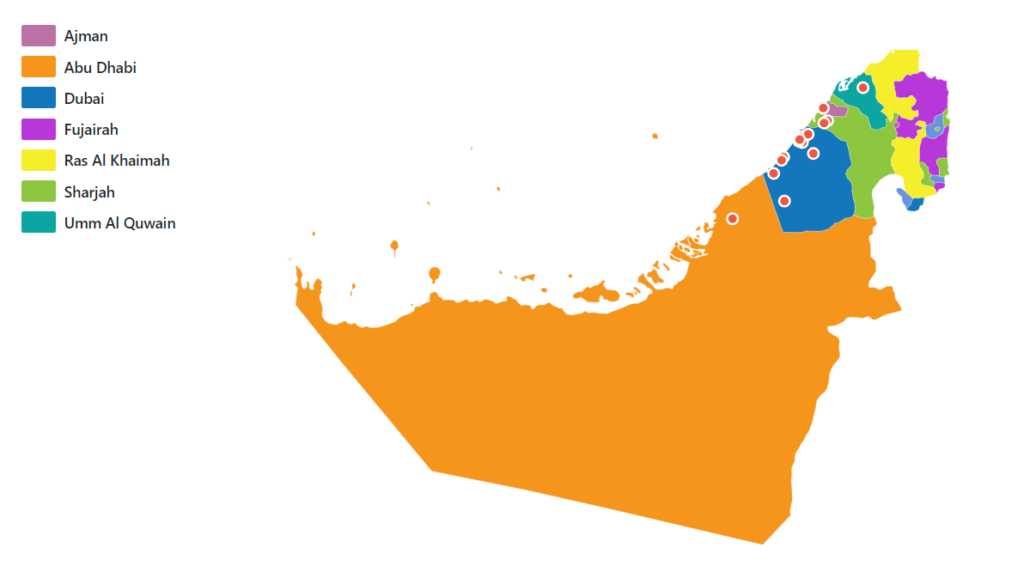
ᐉ 【Cheapest Free Zone in UAE】 What is a free zone in Dubai — «Dynasty Business Adviser»

The best results come when you design your free zone structure around your product roadmap and risk profile, then use experienced advisors to interface with regulators, banks and partners.

Aston VIP’s role in your licensing journey

The final step in this simple guide to picking the right UAE free zone for crypto friendly company setup is recognising that you do not have to navigate the detail alone. The regulatory landscape now spans ADGM, DIFC, VARA, federal regulators and several commercial free zones, each with its own documentation requirements, capital expectations and substance rules. Getting the structure right at the beginning saves time, money and reputational risk when you later raise capital, apply for more complex licences or expand into new markets.

Aston VIP works end to end. That begins with a clear conversation about your business model, where revenues will actually arise and which counterparties matter most. From there, the team helps you shortlist suitable free zones, compare regulatory expectations, estimate realistic timelines and choose the right mix of regulated and unregulated entities. Existing guides on crypto company setup, virtual asset service providers, ADGM, DIFC and specific free zones give you a transparent view of the options, long before any forms are signed.

Once a decision is made, Aston VIP supports you with applications, business plans, AML and risk documents and ongoing compliance frameworks, drawing on experience across trading desks, Web3 studios, funds and payment firms. The team also helps you align your structure with practical needs such as visas, office requirements and accounting support, so that the free zone you choose works for your staff as well as your board.

When you are ready to discuss your own project, you can reach the team directly through the contact page and outline your preferred timeline, budget and risk appetite from the start.

Leave a Reply

Your email address will not be published. Required fields are marked *

Share this article

Stay updated with our latest articles

We stay up-to-date with the latest news regarding business and company formation in Dubai, UAE

Dubai crypto license guide for VARA DMCC and UAE requirements

UAE | VARA

New UAE VAT rules from october 2026

Tax | UAE

UAE VAT rules and FTA VAT supplier verification

ADGM Tokenisation licence guide 2026

ADGM | Crypto

ADGM tokenisation license for digital securities and real world assets
UAE stablecoin regulation guide for regulated digital payment tokens

UAE stablecoin regulation guide 2026

ADGM | Crypto

Get in touch with us today!

Book a free consultation and let us show you how easy it can be.

Leave your number, and we’ll call you back within 5 minutes!

Our working hours: Monday to Friday, 9 AM – 6 PM GMT+4

Prefer messaging? Drop us a message on your favourite app or give us a call:

Leave your number, and we’ll call you back within 5 minutes!

Our working hours: Monday to Friday, 9 AM – 6 PM GMT+4

Contact us

Our working hours: Monday to Friday, 9 AM-6 PM GMT+4
Chat with us

Telegram

WhatsApp

Signal

Get call back

We’ll call you back within 5 minutes!

or simply call us

Book a meeting

Get tailored solution from experts

In this page

Share this article

Only available until June 30 — start now

Get a FREE UAE Resident VISA for Life

Never pay for your VISA fee again

Save 4,500 AED every two years on renewal fees